

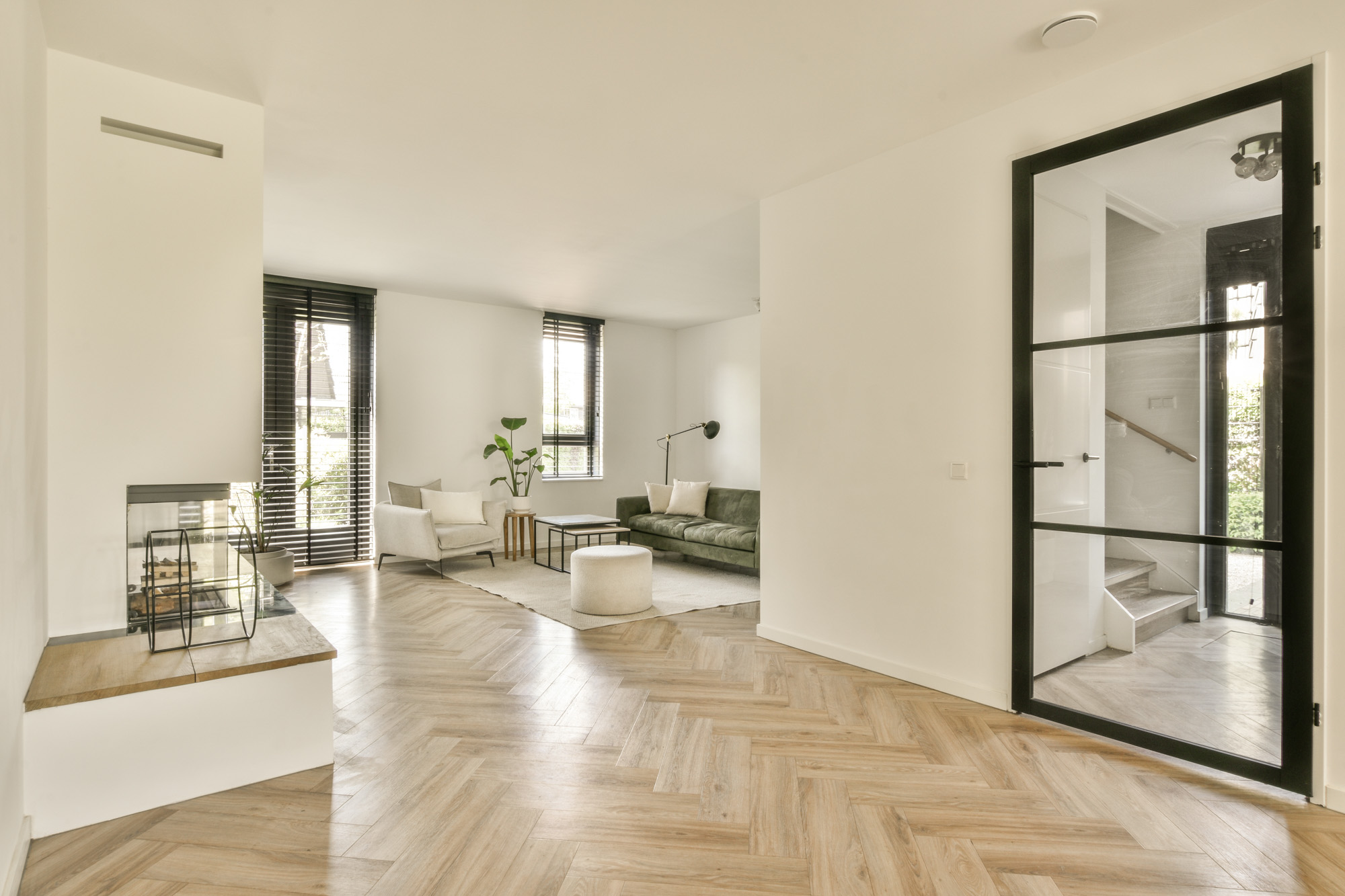
Built in bookshelves, custom cabinets, and fitted storage can give your home a distinctive look while making better use of your space. Since these features often remain in place for years, the flooring you choose should complement them rather than compete for attention. Hardwood flooring can provide a natural foundation that brings your cabinetry, shelving, and other interior details together.
When you explore hardwood flooring options from Massud & Son Floor Covering, consider how the color, grain, and finish will work with the features already in your rooms. You can also visit our flooring showroom in Central Falls, RI to explore ideas for creating a coordinated interior.
Start With the Color of Your Cabinetry
Your cabinetry provides a useful starting point when selecting hardwood flooring. If your built in shelves feature warm wood tones, a hardwood floor with complementary undertones can help the room feel cohesive. You do not necessarily need an exact match. In fact, choosing slightly different shades can help each feature stand out without making the design feel overly uniform.
For white or cream cabinetry, medium brown hardwood can introduce warmth and contrast. If your cabinets are dark, a lighter floor may keep the room from feeling too heavy. Pay attention to undertones as well. Wood finishes with noticeably different red, yellow, or gray undertones may clash even when their overall shades appear similar.
Balance Wood Grain and Visual Detail
Hardwood has natural grain patterns that contribute to its character. Your shelving and cabinetry may also feature visible wood grain, decorative panels, or detailed trim. When several surfaces have strong patterns, the room can feel visually busy.
To create balance, consider a more subtle hardwood grain if your cabinetry already has prominent detailing. Alternatively, a floor with distinctive grain can add character to a room with simple, understated cabinets. The goal is to give each feature room to stand out while maintaining a comfortable visual flow.
Consider the Size and Layout of Your Room
The dimensions of your space can influence how your hardwood flooring and built in features work together. In a compact study or reading nook, lighter flooring may help the room feel more open, particularly when paired with shelving that extends toward the ceiling.
In a larger living room, deeper wood tones can create a grounded appearance beneath a long wall of cabinetry. The direction of the floorboards can also influence how you perceive the room's proportions. Consider the placement of windows, doorways, and built in units before deciding on a layout.
Coordinate Finishes Without Making Everything Identical
Your hardwood flooring does not have to match every wood surface in your home. A thoughtful mix of finishes can make an interior feel more layered and natural. For example, you might pair medium toned hardwood with painted cabinetry and wooden shelves in a slightly different shade.
Look at the other finishes in your room, including wall colors, hardware, countertops, and furniture. Bringing a few complementary tones together can help your built in features feel connected to the flooring without creating a showroom like appearance.
Choose Hardwood for Long Term Appeal
Your shelving and cabinetry may influence the room's design for many years, so choose flooring that works with those permanent features and your future plans. Consider how much foot traffic the room receives, how you prefer to maintain your floors, and whether the selected hardwood product suits the room's conditions.
Ready to find hardwood flooring that complements your interior? Contact Massud & Son Floor Covering to discuss your project and explore flooring options for your home in Central Falls, Providence, Pawtucket, Smithfield, or nearby communities.

